

Becoming a landscape lighting dealer is more than buying fixtures at wholesale prices and reselling them. Successful dealers serve contractors and other trade customers with reliable products, technical support, and consistent supply.
Whether you already operate a landscape, irrigation, electrical, or lighting business—or are entering the industry for the first time—this guide explains how to choose the right business model, find manufacturers, prepare your dealer application, review terms, and complete onboarding.

What Is a Landscape Lighting Dealer?
A landscape lighting dealer supplies low-voltage lighting products to contractors, installers, builders, designers, and other trade customers. Unlike a typical retail store that mainly serves homeowners, a professional dealer usually focuses on repeat business from contractors and project-based buyers.
Depending on the market and sales model, a landscape lighting dealer may operate in several ways:
- ● Local Counter Dealer: Keeps core products in a local warehouse, showroom, or trade counter so contractors can pick up fixtures, transformers, cable, and accessories as needed.
- ● Contractor Supply Hub: Adds landscape lighting to an existing irrigation, hardscape, electrical, or landscape supply business, giving contractors another product category they can source from the same supplier.
- ● Direct-to-Trade Reseller: Sells primarily to professional customers through online ordering, outside sales, or regional delivery without relying on a traditional retail showroom.
Some larger dealers also operate as distributors, purchasing in greater volume and serving wider territories.
The exact model matters less than the role the business plays: helping trade customers get the right products, technical information, and reliable supply for their projects.
Who Can Become a Landscape Lighting Dealer?
A landscape lighting dealership does not have to start with a dedicated lighting store. In practice, many good candidates already sell to the same contractors who buy or install outdoor lighting.
These businesses are often a natural fit:
- ● Landscape and nursery suppliers: They already work with landscape contractors and can add lighting as another project-related product category.
- ● Irrigation distributors: Their customers often work on the same residential and commercial sites where low-voltage lighting is installed.
- ● Electrical supply houses: Landscape lighting can complement an existing range of electrical and low-voltage products.
- ● Lighting stores and showrooms: Outdoor lighting gives them a way to extend beyond interior fixtures and serve more exterior projects.
- ● Landscape and hardscape contractors: Some installers move into product sales after building a strong local customer and installer network.
- ● Outdoor living and building product suppliers: Businesses serving patios, pools, hardscapes, and exterior construction can add lighting without changing their customer base significantly.
- ● B2B e-commerce sellers and new market entrants: A dealer model can also work for companies that have identified an underserved contractor market and have a clear plan for reaching it.
Industry experience helps, but it is not the only factor. A dealer also needs to know who the customers are, which products they use most often, and how quickly they expect stock, quotes, and technical support.
One point should be checked early: selling lighting products is not the same as installing electrical systems. Business licenses, resale documents, and installation requirements vary by location, so the rules should be confirmed before the business is set up.
Step 1: Define Your Customer Base and Sales Territory
Before you approach a manufacturer, be clear about who you plan to sell to and the area you want to cover.
Your main customers may include:
- ● Landscape contractors
- ● Lighting installers
- ● Electricians
- ● Hardscape contractors
- ● Home builders
- ● Pool and outdoor living contractors
- ● Commercial landscape companies
You should also have a clear idea of your sales territory. Some dealers focus on one city or metropolitan area, while others cover an entire state or region. Online sellers may serve a much wider market.
Manufacturers often ask about territory because they want to understand how your business fits with their existing dealer network and whether there is overlap with other partners.
Your customer base will also shape the products you carry. A contractor-focused dealer, for example, may care more about core fixtures, fast replenishment, technical documents, and installation accessories than a large decorative catalog.
Step 2: Establish Your Business and Compliance Requirements
Once you have defined your customers and sales territory, make sure your business is ready to work with wholesale suppliers.
Before applying for a dealer account, you may need to prepare:
- ● Business registration
- ● Tax or resale documents, where applicable
- ● Business bank account
- ● Commercial insurance
- ● Company website and contact details
- ● Business, warehouse, or shipping address
You should also check whether the products you plan to sell meet the requirements of your target market.
For example, products sold in North America may require UL or ETL certification depending on the product and application. Wireless or smart lighting products may also be subject to FCC requirements.
For outdoor fixtures, check wet-location suitability, IP ratings, product labeling, and installation documentation. More importantly, confirm that any certification provided by the supplier applies to the exact model you intend to purchase.
Finally, check the local rules that apply to your own business. Selling low-voltage lighting products and installing electrical systems are different activities, and licensing requirements can vary by location.
Step 3: Choose Your Dealer Business Model
Once the basic business requirements are in place, decide how you want to enter the market. The right model will depend on your customer base, available capital, and how much control you want over the products you sell.
| Business Model | What You Sell | Typical Commitment | Best Suited For |
|---|---|---|---|
| Authorized Dealer | Products from an established brand | Low to medium | Local dealers, showrooms, and trade-focused sellers |
| Distributor / Direct Importer | Manufacturer product lines purchased in larger volumes | Medium to high | Regional wholesalers and established B2B suppliers |
| Private Label Brand | Products sold under your own brand | Medium to high | Companies that want more control over branding and product specifications |
An authorized dealer is usually the easiest way to enter the market. Distributors and direct importers take on more inventory and supply responsibility, while private label offers more control but requires greater commitment.
If private label is part of your plan, read When and How to Launch Your Own Private Label Landscape Lighting Line for a detailed guide.
Step 4: Select Your Starter Product Range
Once you have chosen your business model, the next step is deciding what to stock first.
A new dealer does not need a large catalog from day one. Start with the products contractors use most often:
- ● Spotlights and uplights for trees and architectural features
- ● Path lights for walkways and planting areas
- ● Hardscape lights for walls, steps, and outdoor living spaces
- ● Deck and step lights for stairs, decks, and low-level accent lighting
- ● Transformers for common low-voltage systems
- ● Cable, connectors, and other installation accessories

It is usually better to offer a small, complete system than a wide range of fixtures without the parts needed to install them. Contractors often buy fixtures, transformers, cable, and connectors for the same job, so compatibility and availability matter.
Keep the initial range focused, then add finishes, wattages, beam angles, and specialty fixtures as you learn what your customers actually buy.
For a deeper look at SKU planning, MOQ, inventory, and cash flow, see Landscape Lighting Wholesale Challenges: From Sourcing to After-Sales.
Step 5: Find Manufacturers Accepting New Dealers
Once your initial strategy is clear, identify manufacturers actively seeking expansion in your target region. Focus on finding reliable factory partners that offer dedicated dealer support rather than one-off wholesale transactions.
Effective sourcing channels include:
- ● Manufacturer Portals: Look for explicit website links such as Become a Dealer, Become a Distributor, Wholesale Program, or Partner With Us.
- ● Industry Trade Shows: Attend regional landscape, irrigation, and electrical expos to meet export managers, inspect fixture build quality, and evaluate product lines in person.
- ● Trade Referrals: Ask experienced local contractors which lighting brands offer consistent stock availability, fast warranty turnarounds, and protected territories.
- ● Direct Factory Outreach: Contact OEM/ODM export departments directly to inquire if dealer representation is available for your specific geographic territory.
At this phase, confirm four essential operational basics: territory availability, current dealer program status, core product offerings, and application requirements.
Looking for a manufacturing partner actively expanding its global partner network? Explore Lutou's Distributor Program to review our certified low-voltage fixtures, factory terms, and wholesale support resources.
Step 6: Prepare Your Dealer Application
The dealer application is where the manufacturer takes a closer look at your business.

You may be asked to provide:
- ● Company name, website, and business address
- ● Years in business
- ● Main customer types
- ● Contractor or trade accounts you currently serve
- ● Sales territory
- ● Sales channels
- ● Showroom or warehouse information
- ● Brands you already carry
- ● Products you want to add
- ● Expected opening order or annual purchase volume
Keep the information practical. If you already work with landscape contractors, say how many active customers you serve and which areas you cover. If you sell mainly online, explain who your buyers are and which markets you serve.
These details help the manufacturer decide whether there is a good fit before moving on to pricing, territory, and dealer terms.
Step 7: Understand What Manufacturers Look for in a Dealer
After you submit your application, the manufacturer will usually look at a few practical areas before approving the account.
| What Manufacturers Look At | Why It Matters |
|---|---|
| Existing customer base | Shows whether you already have access to contractors or trade buyers |
| Sales territory | Helps the manufacturer check market coverage and possible overlap with other dealers |
| Sales channels | Shows whether you sell through a trade counter, sales team, website, or other channels |
| Product knowledge and support | Matters when contractors need help with product selection or basic technical questions |
| Inventory capability | Helps determine whether you can keep core products available locally |
| Purchase potential | Gives the manufacturer an idea of expected order size and future demand |
Purchase volume is important, but it is not the only factor. A dealer with an established contractor base and reliable local service may be more useful than a larger buyer with no clear route to market.
The purpose of this review is simple: the manufacturer wants to know whether you can sell the line consistently and support the customers buying it.
Step 8: Review the Dealer Terms Before You Sign
If the manufacturer is ready to move forward, review the dealer terms before placing your opening order.
Pay particular attention to:
- ● Dealer pricing: Wholesale prices, volume discounts, and any requirements tied to higher pricing tiers
- ● Opening order: The minimum value or quantity required for the first order
- ● Product MOQ: Minimum quantities that may apply to individual models or finishes
- ● Payment terms: Deposit requirements, balance payments, and any credit terms available later
- ● Sales territory: Whether the territory is open, shared, or protected
- ● Online sales and MAP policies: Any rules that affect advertised pricing or marketplace sales
- ● Warranty and returns: How defective products, replacements, and returns are handled
- ● Replenishment: Typical lead times for repeat orders and core products
If territory protection is offered, ask exactly what it covers. It may apply to a city, region, customer group, or sales channel rather than every sale within a geographic area.
Warranty terms deserve the same attention. Make sure you know who handles claims, what information is required, and how replacement products are supplied before you begin selling the line.
Looking for a Landscape Lighting Supplier for Your Dealer Business?
If you are looking for a manufacturing partner for your landscape lighting business, Lutou Technology works with distributors, wholesalers, importers, and lighting brands in different markets.
Our product range includes brass and aluminum landscape lighting fixtures, transformers, cable, and related system components. OEM/ODM and private-label options are also available for businesses that want to develop their own product line.
Distributor support includes wholesale pricing, flexible payment options, lead-time support, product training, marketing resources, and access to new products.
If you already sell to landscape contractors, lighting installers, or other trade customers, tell us about your business, market, and the products you are interested in.
Apply to Become a Lutou DistributorStep 9: Place Your Opening Order
Once the pricing, territory, payment terms, and warranty details are agreed, the next step is to turn the dealer agreement into an actual opening order. This is the point where you should confirm the product details one last time before committing to inventory.
Before placing the order:
- ● Approve the samples. Check the finish, light output, CCT, construction, packaging, and installation details.
- ● Choose the core models. Start with the fixtures and accessories that best match the type of projects your customers handle.
- ● Confirm the specifications. Review voltage, wattage, beam angle, material, finish, accessories, and product codes.
- ● Check the documents. Make sure the required certifications, spec sheets, and installation information are available for your market.
- ● Confirm lead time and shipping. Check production status, packing details, estimated ship date, and delivery method.
- ● Place the opening order. Keep the first order focused enough that you can adjust future purchases once you see which products move fastest.
If you are buying factory-direct, this is also the right time to confirm how repeat orders will be handled and whether local stock is available for faster replenishment. For a deeper comparison, see China Factory Direct vs. U.S. Warehouse Fulfillment.
Once the opening order is in place, the focus shifts from purchasing to launch: preparing your team, product information, pricing, samples, and contractor outreach.

Step 10: Onboard and Launch Your Dealer Business
After the first order is placed, get everything ready before the products arrive.
Make sure your sales team knows the main fixture types, where each product is used, how the transformers are matched, and how warranty claims are handled.
Prepare the materials contractors will actually ask for:
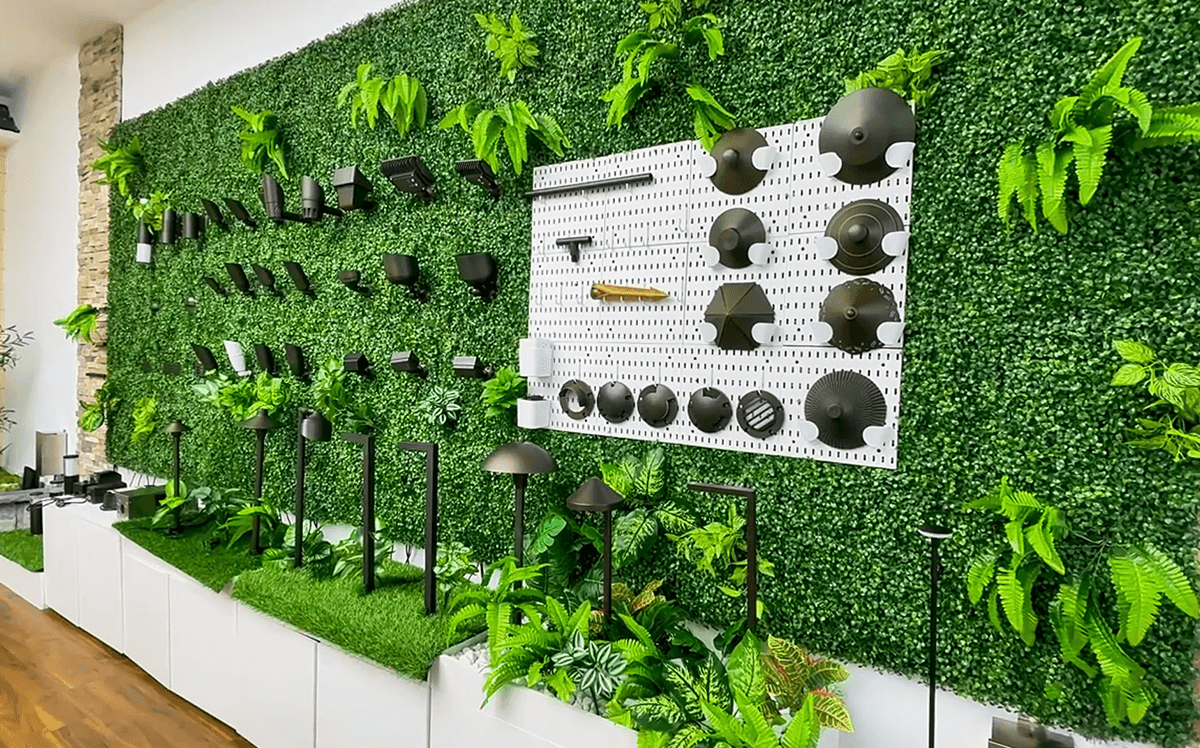
- ● Product samples or a simple display board
- ● Trade price lists
- ● Spec sheets and installation guides
- ● Product photos for your website or quoting system
- ● Basic warranty and return information
When the stock arrives, start with the contractors you already know. Show them the core products, explain what is available locally, and make it easy for them to place a first order.
You don't need to launch every model at once. Watch which fixtures contractors ask for, which accessories are reordered, and which products sit on the shelf. Use that information to decide what to bring next.
How Much Does It Cost to Become a Landscape Lighting Dealer?
There is no fixed amount, but a rough starting budget can help you plan.
| Dealer Setup | Typical Starting Budget | What It Usually Covers |
|---|---|---|
| Small add-on dealer | $1,000-$5,000 | Samples, a limited opening order, and a small range of core products |
| Local stocking dealer | $5,000-$15,000 | Core fixtures, transformers, cable, connectors, displays, and local inventory |
| Regional dealer/distributor | $15,000-$50,000+ | Broader inventory, larger opening orders, freight, warehouse stock, and sales materials |
| Direct importer | $30,000-$100,000+ | Factory orders, freight, duties, deeper inventory, and longer replenishment cycles |
Note: Actual startup costs can vary widely. Your budget will depend on the supplier you choose, how much inventory you carry, whether you import directly, and what facilities and sales resources you already have.
The biggest expense is usually inventory. You may also need to budget for samples, display boards, freight, customs costs, storage, product pages, catalogs, and other sales materials.
If you already have a warehouse, website, sales team, and contractor customer base, your startup cost may be much lower. A new business starting from scratch will usually need more working capital.
For most new dealers, there is little reason to stock the full catalog at the beginning. Start with the fixtures, transformers, cable, and connectors that cover common contractor jobs, then add more models as you see what customers actually reorder.
10 Questions to Ask Before Signing a Dealer Agreement
Before you commit to a supplier, make sure you have clear answers to these questions:
- ● Is my sales territory protected, shared, or already covered by another dealer?
- ● What is the minimum opening order?
- ● Are there any annual purchase requirements to keep dealer status or pricing?
- ● Do you have a MAP policy or any restrictions on online sales?
- ● How are warranty claims, defective products, and returns handled?
- ● Are discounted samples, display boards, or demo kits available?
- ● What product or technical training do you provide?
- ● Can you provide spec sheets, IES files, installation guides, product images, and other sales materials?
- ● How quickly can core products usually be replenished?
- ● If our volume grows, can we move into OEM or private label later?
These questions will help you understand how the relationship works day-to-day, not just what the wholesale price looks like.
Frequently Asked Questions
Do I need a physical showroom to become a landscape lighting dealer?
Not always. Some dealers operate from a trade counter or warehouse, while others sell through outside sales teams or online channels. What matters is having a practical way to show products, provide technical information, and fulfill orders.
Can I become a landscape lighting dealer without importing directly from a factory?
Yes. You can buy through an established distributor or represent an existing brand before moving into direct importing. Direct factory purchasing usually becomes more practical once your order volume is large enough to justify higher inventory and freight commitments.
Do I need to keep landscape lighting products in stock?
It depends on how you sell. Local contractor-focused dealers usually benefit from keeping common fixtures, transformers, cable, and connectors available for quick pickup. Online or project-based sellers may be able to work with lighter inventory and longer lead times.
Can I sell landscape lighting online as an authorized dealer?
Often yes, but check the manufacturer's dealer policy first. Some brands have rules covering online marketplaces, advertised pricing, or the areas in which dealers are allowed to sell.
Can I carry more than one landscape lighting brand?
In many cases, yes. Some dealers carry several brands to cover different price points or product categories. However, certain dealer agreements may include restrictions on competing lines, so this should be confirmed before signing.
How long does it take to become a landscape lighting dealer?
The timeline depends on the manufacturer and the type of account. A standard dealer account using existing products can be relatively straightforward, while samples, territory discussions, direct importing, customization, or private-label work can add more time before you are ready to sell.
Do I have to meet an annual sales target to stay an authorized dealer?
Not always. Some manufacturers have annual purchase requirements, while others do not. Sales targets may also be tied to higher discount levels, territory protection, or other dealer benefits, so review the terms before committing.


